The Cost of Waiting: Why Lower Mortgage Rates Don’t Always Mean a Better Deal; Gena Graham
 THE REALITY OF TWO HOUSING MARKETS
The market you’re waiting for may not be the market you actually want.
There is a certain luxury in waiting.
Waiting for the right house.
Waiting for the right moment.
Waiting for mortgage rates to come down.
Waiting for prices to soften.
Waiting for more inventory.
Waiting for someone, somewhere, to finally announce:
“Okay. Now is the perfect time to buy.”
The problem?
Real estate has never been particularly interested in perfect timing.
And while buyers wait for every economic variable to line up beautifully in their favor, the market continues moving—with or without them.
There is an idea circulating right now that deserves a far more sophisticated conversation:
There are essentially two versions of the housing market a buyer may encounter.
Neither is perfect.
Both involve trade-offs.
And both can create opportunity.
The buyer who understands that has an enormous informational advantage over the buyer simply waiting for the market to become comfortable.
Because buyers don't purchase an interest rate.
They purchase a home—at a price, under a particular set of market conditions, with a certain amount of competition and negotiating leverage.
And that distinction changes everything.
MARKET ONE
Mortgage rates come down. Buyers celebrate. And then everyone shows up.
This is the market many buyers say they're waiting for.
Mortgage rates decline.
Payments become more attractive.
Purchasing power improves.
People who have been sitting on the sidelines begin calling their lenders again.
At first glance, it sounds ideal.
Except there's one rather important detail:
You weren't the only buyer waiting.
When financing becomes more attractive, buyers who postponed their plans can return to the market at the same time.
And in desirable neighborhoods—particularly those with limited inventory—that matters.
That beautiful house on the tree-lined street?
You may no longer be the only person considering it.
The historic bungalow that might have sat quietly for two weeks?
It may suddenly attract several interested buyers.
The seller who might have entertained a price adjustment, closing-cost contribution or repair request?
That seller may have significantly less incentive to negotiate when another buyer is standing behind you.
This is one of the great paradoxes of waiting for “better” conditions:
When the market becomes more attractive to you, it can become more attractive to everyone else, too.
And competition has a price.
Sometimes literally.
THE RATE MAY DROP.
The price may not.
This is where sophisticated buyers stop looking at one number and begin looking at the entire transaction.
Imagine two versions of the same purchase.
A home is offered at $600,000 during a slower market.
Buyer activity is softer.
Perhaps the seller accepts $580,000.
Perhaps there's an opportunity to negotiate an allowable seller concession.
Perhaps some of that concession can be used toward closing costs or an interest-rate buydown.
Perhaps the buyer isn't competing against five other offers and has time to conduct thoughtful due diligence.
Now imagine mortgage rates decline months later.
The financing environment looks better.
But more buyers have returned.
The comparable home is now offered at $610,000 or $620,000.
And instead of negotiating down, you're competing up.
The lower interest rate suddenly has company:
A higher purchase price.
This is why evaluating real estate exclusively through the lens of today's mortgage rate can be remarkably shortsighted.
MARKET TWO
Rates remain higher. Competition cools. Negotiating becomes interesting.
This is the market buyers tend to complain about.
Savvy buyers study it.
Because markets that feel uncomfortable can sometimes create opportunities that disappear once everyone becomes comfortable again.
When mortgage rates remain elevated, some buyers leave the market or reduce their purchasing power.
Depending on the property and local conditions, that can mean fewer showings.
Longer market times.
More motivated sellers.
Price adjustments.
Closing-cost negotiations.
Rate buydowns.
Repair concessions.
And sometimes, simply enough breathing room to make a rational decision without feeling as though fifteen people are standing behind you.
None of those things are guaranteed.
Real estate is intensely local.
One neighborhood can behave very differently from another neighborhood only a few miles away.
One beautifully presented home can receive multiple offers while another property around the corner sits.
That's exactly why the conversation shouldn't end with:
“Rates are high.”
The next question should be:
“What does this market allow me to negotiate?”
Now we're having a much more interesting conversation.
YOU MAY BE ABLE TO REFINANCE A MORTGAGE.
You cannot refinance what you paid for the house.
That sentence deserves a second read.
If interest rates decline in the future, a homeowner with an eligible mortgage may potentially refinance if they qualify and the economics make sense.
Refinancing isn't free.
It isn't guaranteed.
It depends on future rates, qualification, equity, loan terms, closing costs and the homeowner's individual circumstances.
But the original purchase price?
That number doesn't get renegotiated after closing.
If you paid $625,000 because ten buyers returned to the market simultaneously, you don't get to call the seller two years later and ask them to revise your purchase price to $595,000.
The price became part of your transaction the day you closed.
That is why purchase price and terms deserve at least as much attention as the interest rate.
THE $20,000–$40,000 CONVERSATION
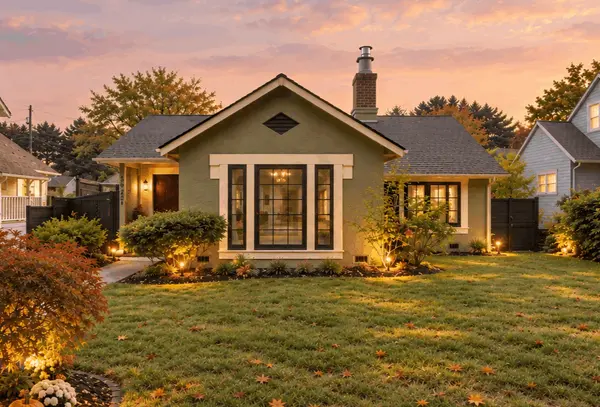
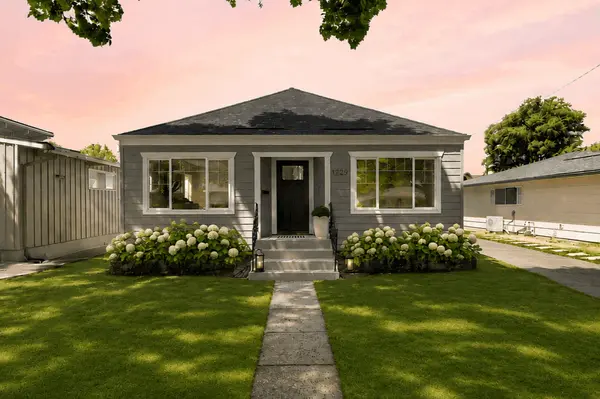
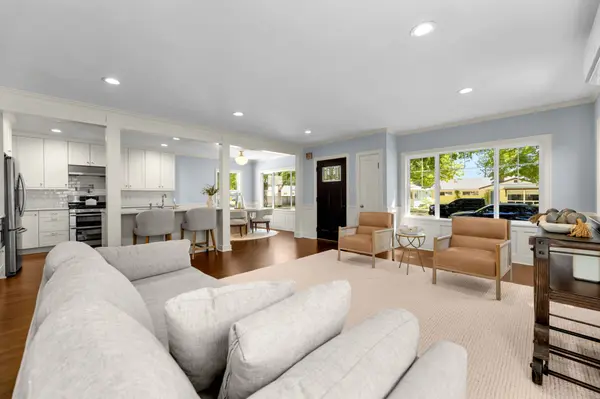
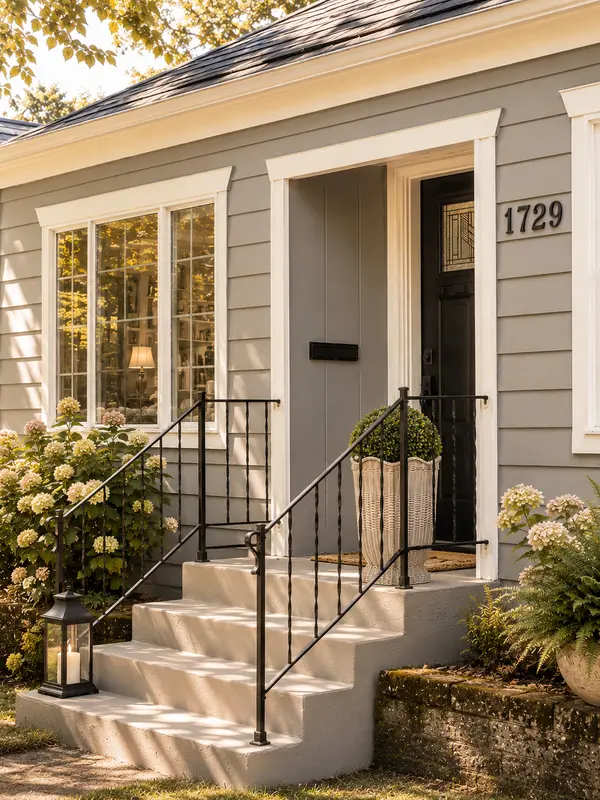
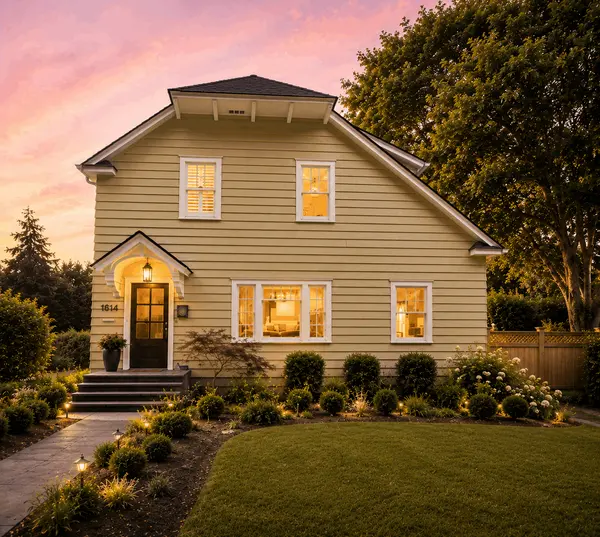
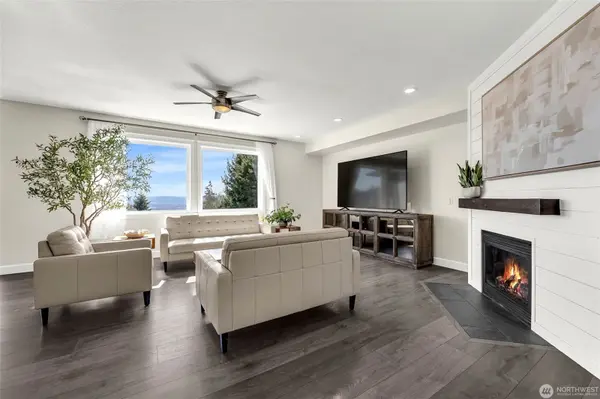
The concept behind these photos is intentionally provocative:
Could buying in one type of market potentially leave you owing $20,000–$40,000 less on the home itself?
Possibly.
But it is not a universal rule, and it certainly isn't guaranteed.
Every home, buyer, loan and local market is different.
The important part is the concept.
Imagine a buyer purchases during a less competitive period and negotiates $25,000 from the asking price.
Perhaps they also negotiate an allowable seller contribution toward closing costs or financing.
Compare that with another buyer who waits until rates fall, only to find themselves paying $25,000 or $30,000 more for a similar home because competition has returned.
The buyer with the lower interest rate hasn't necessarily purchased the home under better overall financial terms.
That's why smart buyers don't deal in slogans.
They run scenarios.
They understand the difference between price and payment.
They look at the whole transaction.
AND THEN THERE'S THE BUYER WHO WAITS.
There is always a buyer waiting for the market to give them permission.
They're waiting for rates to come down.
Waiting for prices to come down.
Waiting for more inventory.
Waiting for spring.
Waiting for fall.
Waiting for the Fed.
Waiting for the economy.
Waiting for next year.
Waiting for whatever headline comes next.
They've been “watching the market” for six months.
Sometimes a year.
Sometimes longer.
And they often believe waiting automatically makes them the cautious buyer.
It doesn't.
There is a very real difference between being patient and being paralyzed.
A patient buyer knows exactly what they're waiting for.
They have a number.
A financial threshold.
A neighborhood.
A payment.
A down-payment goal.
A specific inventory problem.
A reason.
The perpetually undecided buyer?
They're often waiting for a feeling.
They want the market to become comfortable enough that buying no longer feels risky.
But here's the problem:
By the time everyone feels comfortable, everyone else may be comfortable too.
That's when the sidelines can get crowded very quickly.
Rates fall.
The buyer who has been waiting finally calls their lender.
So do other buyers.
Suddenly the house that might have had one interested buyer has several.
The seller who may have considered a concession doesn't necessarily need to anymore.
The price reduction you were hoping for may never happen.
And the buyer who spent a year waiting for a better interest rate may find themselves competing for a more expensive house with less negotiating power.
Congratulations—you got the rate you were waiting for.
You may have also gotten the competition you weren't.
That's the part of “waiting for rates to come down” that rarely fits neatly into a social-media headline.
WAITING HAS A PRICE, TOO.
Buyers are very good at calculating the cost of buying.
Mortgage payment.
Interest rate.
Down payment.
Closing costs.
Property taxes.
Insurance.
All important.
But remarkably few people calculate the cost of waiting with the same intensity.
What happens if the home you could purchase today for $575,000 costs $600,000 later?
What happens if today's seller is willing to negotiate, while tomorrow's seller is reviewing multiple offers?
What happens if today's seller would consider an allowable closing-cost contribution or rate buydown, but tomorrow's seller doesn't have to?
What happens if you spend another twelve months renting while waiting for a market that never materializes exactly as you imagined?
But there's another question an intelligent buyer should ask:
What happens if I wait and I'm right?
Maybe prices soften.
Maybe rates improve.
Maybe inventory increases.
Maybe your personal financial position becomes substantially stronger.
Then waiting may absolutely have been beneficial.
That's why intelligent real estate advice should never simply be:
“Buy now before it's too late.”
That's not analysis.
The better conversation is:
“Let's calculate what waiting actually needs to accomplish for waiting to make financial sense.”
That's strategy.
IF YOU'RE GOING TO WAIT, KNOW WHAT YOU'RE WAITING FOR.
This is where buyers can make an enormous mistake.
They say:
“We're going to wait.”
Okay.
For what?
A 0.50% rate reduction?
A $25,000 price reduction?
Another $500 per month in income?
A larger down payment?
More homes in a particular neighborhood?
A specific monthly payment?
Those are measurable.
Those can be modeled.
Those can become an actual strategy.
But:
“We're just going to see what happens…”
isn't much of a financial plan.
It's handing the decision to the market and hoping the market eventually delivers every condition you wanted.
And real estate has a funny way of charging people for certainty.
When fewer people want to buy, buyers can sometimes gain leverage.
When everybody wants to buy, sellers can gain leverage.
You rarely get maximum certainty, minimum competition, the lowest price and the best financing environment all at the exact same moment.
If that's the market you're waiting for, you may be waiting for something that never arrives exactly as imagined.
THE MOST EXPENSIVE BUYER IN THE ROOM MAY BE THE ONE WHO THINKS THEY'RE BEING “CAREFUL.”
There is a fascinating difference between caution and indecision.
Caution says:
Show me the numbers.
Indecision says:
Maybe I'll wait and see.
Caution asks:
What happens to my payment if the rate changes?
Indecision says:
I'll buy when rates are better.
Caution studies the property, neighborhood, comparable sales, seller motivation, financing options, concessions, inspection findings and long-term ownership plan.
Indecision waits for certainty.
And real estate rarely provides certainty.
Buyers can spend months trying so hard to avoid making the “wrong” decision that they never calculate the potential cost of making no decision at all.
Six months passes.
Then twelve.
The house they loved sells.
Another appears.
Rates move.
Prices move.
Inventory changes.
Life moves forward.
And they're still standing at the edge of the pool asking whether the water might be two degrees warmer next summer.
At some point, that's no longer strategy.
That's hesitation dressed up as financial sophistication.
THE BUYER I WORRY ABOUT ISN'T THE BUYER WHO WAITS.
It's the buyer who waits without doing the math.
Because waiting can absolutely be the right decision.
There are buyers who should wait.
Maybe their finances aren't ready.
Maybe their employment situation is changing.
Maybe they need more reserves.
Maybe the right inventory simply isn't available.
Maybe the numbers genuinely don't work.
That's an informed decision.
But postponing a six-figure purchase simply because someone said rates are “too high”—without calculating price, payment, concessions, competition, opportunity cost and your actual break-even point—is something entirely different.
You're not making a conservative decision if you haven't examined the numbers.
You're making an incomplete one.
And there is nothing particularly sophisticated about sitting on the sidelines for twelve months only to discover that the opportunity you were waiting for looked very different from the opportunity you already had.
SOPHISTICATED BUYERS DON'T ASK, “IS THIS A GOOD MARKET?”
They ask better questions.
What is happening in this neighborhood?
How much negotiating leverage do I actually have?
How does this home's price compare with recent sales?
How long has it been on the market?
Has the seller adjusted the price?
What does my payment look like under several financing scenarios?
Could an allowable seller concession improve the economics?
What would a rate buydown actually accomplish?
What happens financially if rates fall?
What happens if they don't?
How long do I realistically expect to own this home?
And perhaps most importantly:
What would have to happen over the next 6–12 months for waiting to leave me financially better off?
Those questions aren't as exciting as a headline announcing that mortgage rates dropped.
They're considerably more useful.
Because sophisticated buyers rarely make major asset decisions based on one number.
They examine the entire structure of the deal.
Your home purchase deserves the same level of thought.
SELLERS SHOULD BE PAYING ATTENTION, TOO.
This isn't exclusively a buyer conversation.
If you're considering selling, understanding these two markets matters just as much.
When rates decline and buyer activity increases, sellers may benefit from additional demand.
But increased demand doesn't suddenly make every house desirable.
Presentation still matters.
Pricing matters.
Condition matters.
Photography matters.
Staging matters.
Marketing matters.
Launch strategy matters.
And those first days on market can matter enormously.
Conversely, when rates remain elevated and buyers become more selective, mediocre marketing becomes painfully obvious.
A house cannot simply be placed online with mediocre photographs, an optimistic price and a paragraph about granite countertops and expect the market to do the rest.
Not in a selective market.
Buyers need a reason to choose your house.
The home needs to feel considered.
Intentional.
Memorable.
Worth leaving the couch for.
Worth writing the offer for.
Worth choosing.
That is the difference between simply putting a house on the market and actually bringing a property to market.
THERE IS NO SECRET THIRD MARKET COMING TO SAVE EVERYONE.
Some buyers are waiting for a magical combination:
Lower mortgage rates.
Lower home prices.
More inventory.
Less competition.
Motivated sellers.
Generous concessions.
A perfect inspection.
And plenty of time to think about it.
Could some of those conditions exist together?
Absolutely.
But expecting every desirable variable to move in your favor simultaneously isn't a strategy.
It's a wish list.
Real markets involve trade-offs.
When financing becomes easier, demand can increase.
When demand decreases, negotiating leverage may improve.
When exceptional inventory appears, competition can increase regardless of rates.
When an overpriced property sits, opportunity can emerge.
There isn't one national headline capable of telling you whether a particular house, on a particular street, at a particular price, under a particular set of terms makes sense for you.
That's why local knowledge matters.
INFORMATION IS EXPENSIVE—UNTIL YOU COMPARE IT WITH IGNORANCE.
You aren't supposed to know everything about real estate before buying or selling a home.
That's what experienced professionals are for.
But you should understand the transaction you're entering.
Because there is nothing sophisticated about spending six figures while understanding only one variable.
A buyer who knows the interest rate but doesn't understand price is missing information.
A buyer who knows the price but doesn't understand comparable sales is missing information.
A buyer who doesn't understand concessions, financing, appraisal, inspections, market time or seller motivation is negotiating with only part of the picture.
And unfortunately:
The market doesn't give discounts for being uninformed.
The person on the other side of the negotiating table may understand exactly what you don't.
And that knowledge gap can become expensive.
STOP TRYING TO PREDICT THE PERFECT MARKET.
Start learning how to recognize opportunity in the market that actually exists.
Maybe buying today makes sense.
Maybe waiting makes sense.
Maybe the strategy is negotiating price.
Maybe it's negotiating concessions.
Maybe it's purchasing the right property now and potentially considering refinancing later if circumstances make that advantageous.
Maybe the right decision is walking away entirely.
The point isn't that everyone should buy right now.
The point is that you should know exactly why you're buying—or exactly why you're waiting.
“I heard rates might come down” isn't much of a strategy.
“My financial position, local inventory, current prices and negotiating leverage tell me waiting is better” is.
There's a substantial difference.
THE REALITY OF TWO HOUSING MARKETS
MARKET ONE
Mortgage rates ↓
Buyer demand may ↑
Competition may ↑
Negotiating leverage may ↓
Price pressure may ↑
MARKET TWO
Mortgage rates ↑
Buyer demand may ↓
Competition may ↓
Negotiating leverage may ↑
Seller concessions may become more available
Neither market automatically wins.
Neither guarantees the better financial outcome.
Both create opportunity for the person who understands what they're looking at.
And that's ultimately the difference between watching the housing market and understanding it.
The savvy buyer doesn't need someone to predict exactly what mortgage rates will do next year.
They need good information.
They need the numbers.
They need local context.
They need to understand their leverage.
And then they make their own decision.
Because waiting can absolutely be a strategy.
But indecision isn't one.
And the expensive mistake isn't necessarily buying when rates are higher.
It isn't necessarily waiting, either.
The expensive mistake is making—or postponing—a six-figure decision without understanding what you're waiting for, what you're giving up, and what it could cost you when the market you wanted finally arrives.
If you’ve been wondering whether now is the right time to buy — or whether waiting for rates to drop is really the smartest move — let’s talk.
Buying a home deserves more than scrolling listings and watching interest rates; it deserves a strategy.
If you’re thinking about buying, I’d love to help you understand the entire picture — price, payment, negotiating leverage, seller concessions, competition, and the opportunities that may be hiding in today’s market.
I’m Gena Graham — Your Realtor, Neighbor, and Old West Side Neighborhood Real Estate Expert — and I believe an informed buyer is a powerful buyer.
Because the goal isn’t simply to buy a home.
It’s to recognize the right opportunity when everyone else is still waiting for one. 💛
📲 Call or text me anytime at 360.431.5773 or book an appointment below— let’s find your next home, or sell your current one, while continuing to build this incredible community together.
Gena Graham | HOME REAL ESTATE
Your Neighborhood Real Estate Expert
Community • Lifestyle • Philanthropy
Click here to book a discovery call 🏡
I’m officially a fan—show me the goods (aka your website)! 🏡💻
Gena Graham is a leading real estate expert in Southwest Washington, specializing in luxury homes and waterfront properties throughout Kalama, Camas, and Ridgefield. With over 10 years of experience and countless happy clients, she's your guide to finding the perfect home in SW Washington's dynamic market.
Courtesy of Old West Side Realtor & Neighborhood Expert, Gena Graham — Longview, WA.
Legal Disclaimer;Every home is unique. The marketing plan, pricing strategy, and listing timeline referenced above are examples of one personalized launch designed for a specific property. Marketing results and buyer response will vary depending on property condition, market conditions, location, and pricing. No two listings are marketed the same. All marketing plans are custom-built based on your home’s features, goals, and ideal buyer. For a tailored strategy built specifically for your property, contact me directly to schedule a consultation.
#RealEstate2026 #PNWRealEstate #Longviewwa #oldwestside #RidgefieldRealEstate #LongviewLiving #CamasLuxuryHomes #SellWithGenaGraham #HomeRealEstate #SouthwestWashingtonRealEstate #DreamBigSellSmart 🏠🌟#SWWashington #RealEstate #PNWLiving #LuxuryHomes #WaterfrontLiving
Gena Graham, Realtor®
HOME REAL ESTATE
Old West Side | Longview, Washington
Categories
- All Blogs (147)
- Animal Lovers (3)
- Holiday (3)
- Kalama Christmas Boats (1)
- Kalama Coat Drive (1)
- Kalama Lifestyle (11)
- Kalama Living Local (2)
- Kalama Living Local Passport Event 2025 (1)
- Kalama Real Estate (7)
- Lifestyle (12)
- Marketing (1)
- Newsletter (1)
- Old West Side (18)
- Overpriced Homes (1)
- Pet (3)
- Philanthropy (3)
- Real Estate (84)
- Ridgefield Real Estate (1)
- Washington Lifestyle (2)
Recent Posts